
Most Dubai landlords set their nightly rate once, glance at the calendar a month later, and adjust in panic when bookings stall. That is not pricing — that is guessing. A well-designed short-term rental should be priced the way a boutique hotel prices its rooms: dynamically, seasonally, and against a live competitive set that you actually watch.
Start with the right competitive set
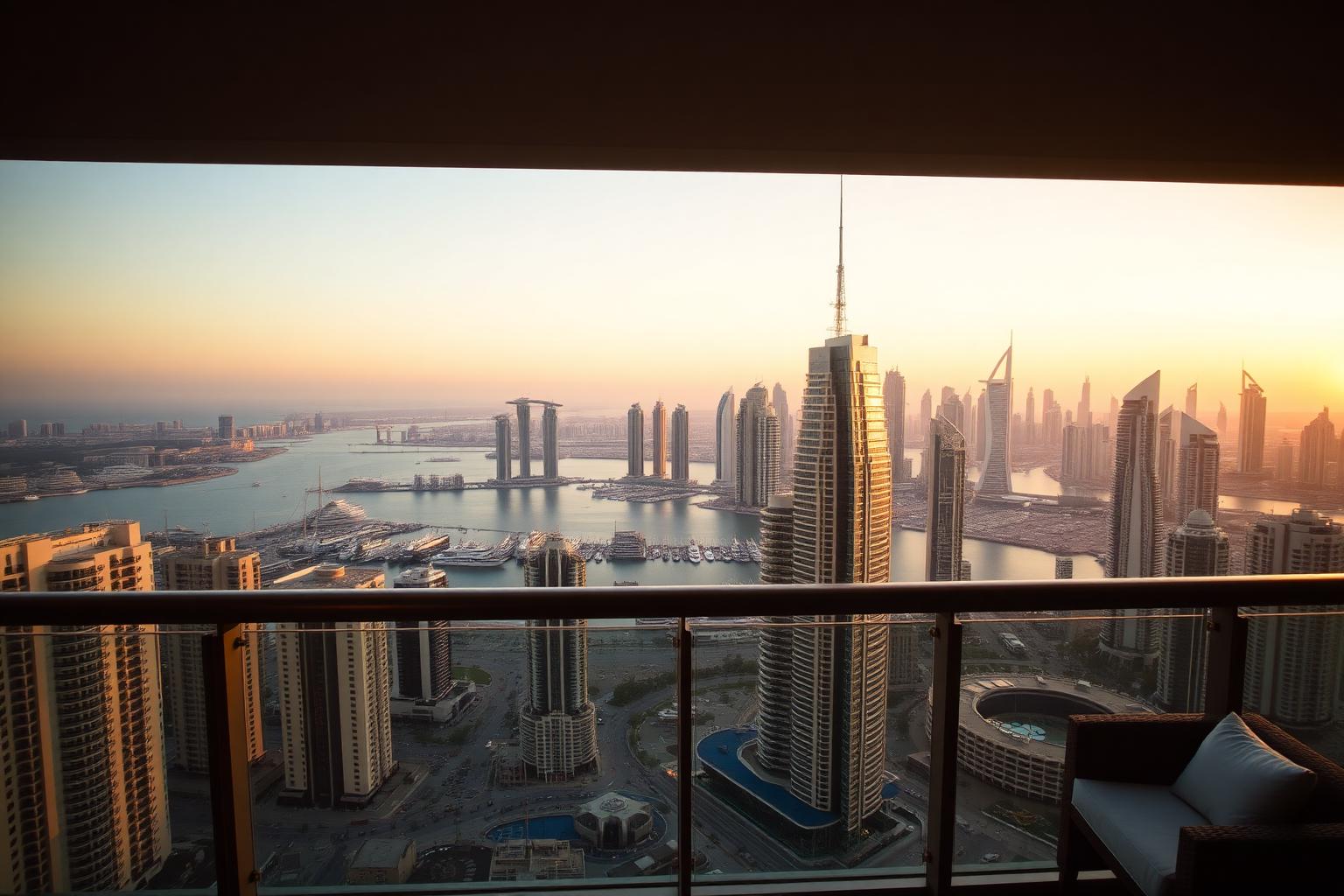
The neighbourhood average tells you almost nothing. A 1-bedroom in Dubai Marina with a full sea view, European-standard finishes and a proper workspace does not compete with the average 1-bedroom in Marina — it competes with the top 15% of listings within a 500-metre radius. Build your comp set from that top slice and you immediately unlock a 20 to 30% premium.
Concretely, we filter competing units by four criteria before adding them to a client’s comp set:
- Photography quality — properly lit, styled, edited images. If the top three photos of a competitor look amateur, it is not in the same league.
- Amenity depth — workspace, coffee setup, blackout curtains, quality linen. Guests filter for these on Airbnb and Booking; missing amenities push a listing into a lower price bracket automatically.
- Review score — anything below 4.7 is a different product. Guests price-anchor on the score before the nightly rate.
- Distance and view — within 500 metres and the same view class (sea, marina, city, pool). A partial view competes with partial views, not with full sea.
Layer three pricing bands, not one
Single-rate pricing is the fastest way to leave money on the table. Every property we deliver ships with three bands built into the pricing model:
- Base rate — the floor you never go below, calculated to cover fixed costs (service charge, DEWA, internet, cleaning float) plus your target margin. This is your Tuesday-in-August number.
- Shoulder rate — mid-week, mid-season, applied automatically when 14-day occupancy forecasts soften. Usually 15 to 25% above base.
- Peak rate — Formula 1 weekend, Art Dubai, DP World Tour, GITEX, New Year, and the two Eid windows. These weeks alone can deliver 25% of annual revenue if priced correctly. Peak rates are typically 60 to 120% above base.
Set the calendar 12 months ahead. Peak weeks are non-negotiable, protected from discount codes, and released to OTAs only after your direct-booking channel has had first pick.
Design decisions that unlock a higher rate
Pricing is downstream of product. The properties we design command a higher nightly rate because guests can see the difference in the first three photos: layered lighting, a real workspace, a proper coffee setup, blackout curtains, and finishes that photograph well. Our clients typically see a 30% uplift in booking value versus comparable unstaged units in the same building.
Five design choices carry disproportionate pricing power in Dubai:
- Layered lighting — three light sources per room, warm colour temperature (2700K), all dimmable. This one change moves reviews from good to memorable.
- A dedicated workspace — not a chair pulled up to the dining table. Business travellers filter for it and pay for it.
- Hotel-grade bedding — 300+ thread count, white, replaced every 12 months. The single biggest complaint driver, and the cheapest fix.
- A photogenic kitchen corner — a proper coffee machine, a wine glass shelf, a bowl of fresh fruit on shoot day. This becomes photo #4 on the listing.
- Blackout curtains everywhere — Dubai sunrise at 05:30 in summer will kill your reviews if guests cannot sleep in.